
Kimberley Murray: A Medical Educator Committed to Excellence and Lifesaving Education
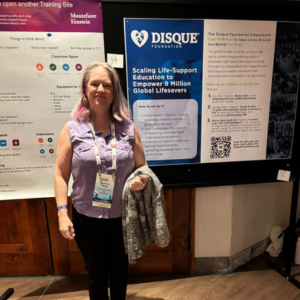 Teaching is more than a profession for some individuals. It becomes a defining purpose that shapes their entire career. For Kimberley Murray, RN, M.S., the Medical Educator at Disque Foundation, education has been the cornerstone of a remarkable journey that began long before she entered the healthcare field. Her commitment to empowering others through knowledge has remained constant, whether she’s standing before nursing students at Johns Hopkins University or guiding community members through CPR training.
From Mathematics to Medicine: An Educator’s Evolution
‘I have always been a teacher,’ Murray reflects. Her journey began with a Bachelor’s degree in Mathematics for Secondary Education, developing analytical thinking and communication skills essential for breaking down complex concepts. After years as an accountant in Baltimore City, she felt drawn to a more people-centered path, leading her to pursue nursing. A decision that would redefine her career and impact.
Murray earned her RN and later a Master’s Degree in Clinical Leadership, positioning herself to teach nursing at the highest academic levels. Recognized as a Clinical Scholarship Recipient, she served for five years as a Clinical and Lab Instructor at Johns Hopkins University and the University of Maryland, teaching Adult Health, Health Assessment, Fundamentals of Nursing, and Critical Care.
Academic Excellence and Clinical Leadership
Murray’s transition into nursing was marked by the same dedication to excellence that characterized her earlier pursuits. After becoming a Registered Nurse, she continued her education to earn a Master’s Degree in Clinical Leadership, deliberately positioning herself to teach nursing at the highest academic levels. Her commitment did not go unnoticed. She was honored as a Clinical Scholarship Recipient, a testament to her outstanding performance and potential as both a clinician and educator.
For five years, Murray served as a Clinical and Lab Instructor at two of the nation’s most prestigious nursing programs: Johns Hopkins University and the University of Maryland. In these roles, she taught comprehensive courses including Adult Health, Health Assessment, Fundamentals of Nursing, and Adult Health II (Critical Care). These are not merely introductory classes. They represent some of the most challenging and formative experiences in nursing education, where students develop the clinical judgment and technical skills that will define their entire careers.
What distinguishes Murray as a Medical Educator is her teaching philosophy. For her, education extends far beyond memorization of facts or procedures. ‘I love helping people understand how the body works scientifically,’ she explains, ‘and giving them those aha moments of clarity.’ This approach transforms complex physiological processes into comprehensible concepts, enabling students to truly understand the why behind clinical interventions rather than simply following protocols.
Bridging Emergency Care and Community Education
Murray’s clinical experience extends well beyond traditional academic settings. Her role as a Clinic Nurse at the U.S. Naval Academy provided invaluable exposure to Emergency and Disaster Management, areas that demand rapid decision-making, preparedness, and the ability to perform under pressure. This experience deepened her understanding of crisis response and reinforced the critical importance of well-trained first responders in life-threatening situations.
Today, she continues serving as a CPR and Basic Life Support (BLS) instructor for both the American Red Cross and the American Heart Association. Whether explaining cardiac physiology to advanced nursing students or demonstrating chest compressions to community members, her mission remains consistent: empower individuals with knowledge and skills that can save lives.
Advancing Resuscitation Science: CASSummit 2025
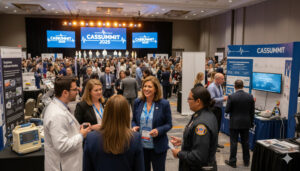
Murray’s influence extends to the global stage through her participation in the Cardiac Arrest Survival Summit (CASSummit) 2025. Held December 3-6 in Phoenix, the summit attracted 1,005 attendees from all 50 U.S. states and 13 countries, representing the largest gathering in over a decade. The event brought together every link in the survival chain: emergency dispatchers, first responders, physicians, cardiologists, nurse educators, and cardiac arrest survivors.
For a Medical Educator like Murray, CASSummit offers invaluable opportunities to engage with cutting-edge research, innovative training methodologies, and evidence-based practices reshaping cardiac emergency care. The knowledge gained directly informs her teaching, ensuring students and trainees receive instruction grounded in the latest scientific evidence.
The Philosophy Behind Lifesaving Education
When asked about the importance of lifesaving education, Murray’s response reflects both professional expertise and personal conviction. Emergency care training is not simply about teaching technical skills. It’s about building confidence, reducing fear, and creating a culture where more people are willing and prepared to act during medical emergencies.
Balancing Professional Excellence with Personal Life
Despite maintaining an impressive career spanning academic instruction, clinical training, and volunteer service, Murray remains grounded in what matters most beyond the classroom and training center. She resides just outside Washington, D.C., where she balances her professional commitments with family life, caring for four children and three cats. This personal dimension provides perspective and reminds us that even the most dedicated healthcare educators value quiet moments and family connections.
The Impact of a Medical Educator
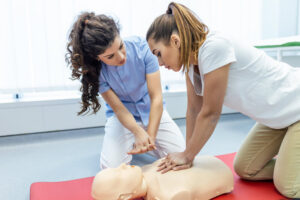
The influence of a skilled Medical Educator extends far beyond individual teaching sessions or certification courses. Every nurse Murray trains at Johns Hopkins will go on to care for countless patients throughout their careers. Every community member she teaches CPR may one day use those skills to save a family member, colleague, or stranger. Every professional who attends her BLS courses will apply that knowledge in emergency situations where competence and confidence make life-or-death differences.
At Disque Foundation, Murray’s work aligns perfectly with the organization’s mission to improve outcomes from sudden cardiac arrest through education, training, and community preparedness. Her expertise in both professional healthcare education and public CPR training makes her uniquely qualified to bridge these worlds, ensuring that lifesaving knowledge reaches everyone from ICU nurses to concerned parents.
A Calling Fulfilled Through Education
Kimberley Murray’s career trajectory from mathematics teacher to accountant to registered nurse to Medical Educator demonstrates how a core calling can manifest across different fields and contexts. What remained constant throughout these transitions was her fundamental identity as an educator and her commitment to helping others understand complex concepts that improve their lives and capabilities.
Today, as a Medical Educator at Disque Foundation and instructor at Johns Hopkins University School of Nursing, Murray continues fulfilling that calling in ways that directly impact patient outcomes and community safety. Her participation in events like CASSummit 2025 ensures she remains at the forefront of resuscitation science, while her teaching philosophy centered on understanding rather than memorization creates healthcare professionals who can think critically in complex clinical situations.